Species
There are many exciting species in the world of Carpathia. Here they are! If you haven't read Carpathia III or Carpathia IV, some info here will be spoilers!
Humans | Nekomi | Nekohumans | Tokki | Elves | Dragons | Komodo | Demons | Aptarans | Hotoh | Cytos | Reethalit | Vireth | Imps
Humans
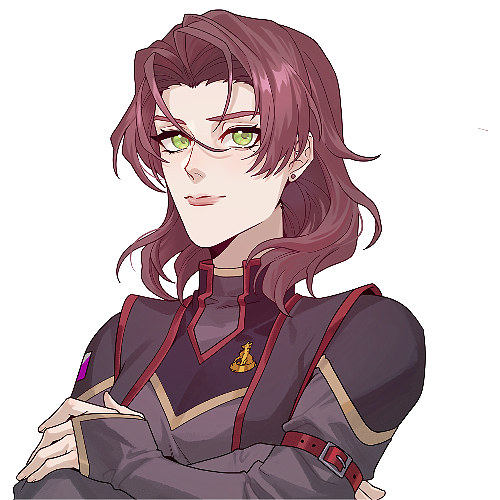
The original Carpathian humans were originally from an island in the South Pacific called Berengaria. For more information, visit the Planets page. Ethnically, Carpathia is primarily populated mostly by former Americans, Japanese, Pacific Islanders, and southeast Asians. There is also a smattering of Canadians, Europeans, and Chinese. Current Carpathian racial diversity and culture also reflects this. Most Carpathian humans live a modern life, but some prefer to live an old-fashioned life without modern technology on the coast, as their islander forebears did. Carpathia ceased all contact with Earth.
As Carpathian humans are relatively new to space exploration, they have a zeal for dramatic designs in their spaceships. The arrival or departure of a capital ship is still an event, a trait which other, more experienced, species find amusing.
Character in the above image by Less_End
Nekomi
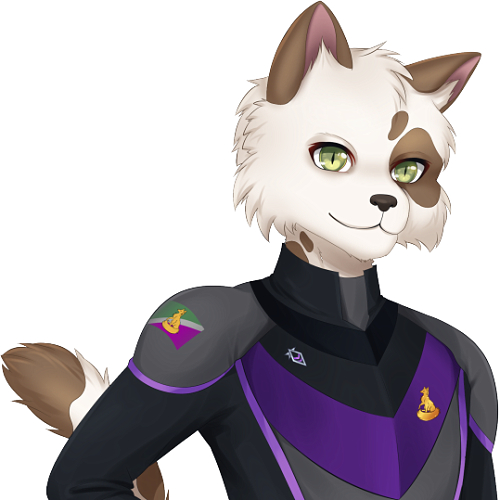
Most nekomi live on Andrast, the second habitable planet that the Carpathians discovered. Andrast is not the original nekomi homeworld. Many centuries ago, they were involved in a war and left their home planet to settle on Andrast. Information from that era was lost, as their ships were dismantled and their computers were repurposed at that time. Until recently, they did not know where their homeworld was, but it has been recently discovered. Formerly known as Yseri, the planet was given its original name once again of Ramewet. It is currently populated by a variety of species from around the galaxy.
More recently, the nekomi suffered from an epidemic that left them sterile and the population dwindled to a few million. Through gene therapy, they became able to bear children with humans, but not their own, resulting in an explosion of the nekohuman population. Upon discovery of Ramewet and the uninfected nekomi living there, they are now able to procreate with their own species and full-blooded nekomi are beginning to thrive once again.
Physically, nekomi have a very wide variation of colorings and body types. Most are a bit shorter than the average human, but some grow extremely tall. Paw size varies considerably as well. Nekomi tend to be extremely flexible and bendy.
Much of the traditional nekomi social structure broke down as the population declined, reaching a low of 3,000,000. Hierarchical, hereditary-based social order no longer exists, though the few remaining old, prominent families impotently try to live and assert themselves as they once did. These sorts of nekomi are considered a curious anachronism rather than instruments of authority.
The nekomi were encountered in New Carpathia's early space-faring years and they became fast friends.
Character in the above image by Less_end
Nekohumans
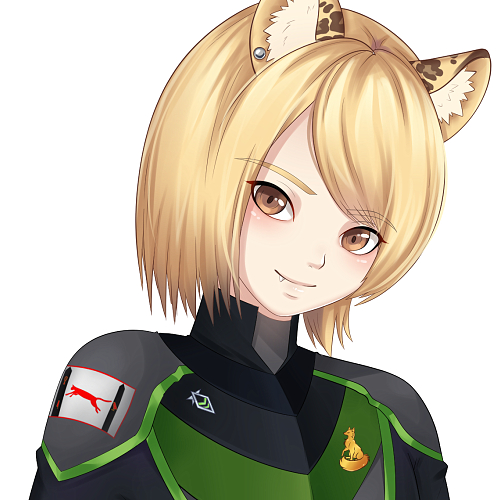
As stated before, until recently, nekomi could only bear children with another species, thus leading to an explosion of nekohuman hybrids. This is a development that has occurred within the last 50 years. No nekohuman in New Carpathia is older than that.
Nekohumans seem like they're mostly human on the outside, albeit with cat ears and tails, but internally, they are more cat, with extremely high levels of flexibility and a tendency to have a high dietary dependency on animal-based proteins. Some nekohumans have more cat-like attributes on the outside than usual, with furry forearms, shoulders, and lower legs, plus claws instead of fingernails.
Character in the above image by: AvareonArt
Tokki
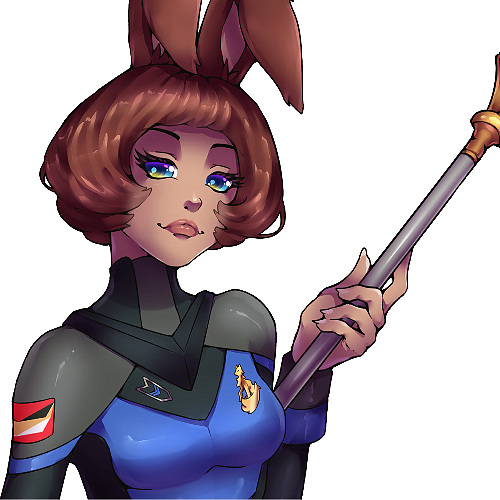
The tokki are a rabbit-like race who live on Tokkastra. They have notoriously vigorous sex drives and women typically have several babies at once, leading to constant population problems. Reproduction is strictly regulated, which isn't too much of a problem, since most tokki are bisexual. Genders are also segregated to prevent accidental overpopulation. Women comprise a fraction of the population, and yet they are a matriarchy, ruled by a queen, and with most leadership positions filled by women.
Relationships amongst tokki are generally not monogamous, as sex is practically considered a basic greeting. Tokki will typically take mates for a year, maybe two, before moving on. Tokki who stay with a single mate for longer are considered deviant by some.
The tokki used to frequently travel the galaxy many centuries ago, but entered a long period of isolation from which they are only now just emerging. The period was so long, in fact, that they were even considered mythological amongst some species.
Tokki lack what we think of as traditional family structures, and instead live in tens of thousands of loosely-structured, gender-segregated community enclaves. Parents do play a role in their childrens' lives, but raising children tends to be more of a community affair. Every community member goes through a ceremony at a young age during which they receive a collar. Each enclave has their own collar design, which denotes not only the enclave from which they come, but also their status in society. A tokki who does not belong to an enclave are known as rohin. It is possible to leave an enclave of one's own volition or, usually in cases of bad behavior, get kicked out. An enclave can be dissolved by the parliament in cases of rampant corruption or treason.
Tokkastra and Carpathia met nearly 50 years ago and established diplomatic relations about 25 years ago. Tokki are permitted to join Carpathia's Space Exploration Academy but are subject to two strict rules. First, they are not permitted to share specified Tokkastran engineering technology. Second, they must strictly adhere to Tokkastran reproduction laws. To counter the Vashta threat, Carpathia and Tokkastra agreed to limited technology sharing.
Character in the above image by: Zelbunnii
Elves

Elves are generally an intensely curious species, constantly asking questions and poking into things they probably shouldn't. Some would call them meddlesome. Elves tend to be extremely talented in one or two areas of aptitude. For the rest, they tend to be so-so at best. A highly developed sense of smell is common amongst female elves in particular. Internal body structure tends to have wider variation than most species. It is not unusual, for example, for an elf to have three lungs instead of two.
Skin color of elves range from pale, like human caucasians, to dark grey. Any elf with shades of brown skin are mixed with another species.
Until a few years ago, the only known elves lived on Ramewet, which is not their native planet. With the Vashta invasion, Carpathia learned that the elf homeworld is in an area of space beyond The Void known as Elaris and entirely subjugated by Lazmaedia the Devourer. Upon Lazmaedia's death, all systems with any sort of electrical power failed, effectively thrusting their society back several levels of technological development. As of the start of Carpathia V, the government is not aware of the death of Lazmaedia or the technological setback. Only the crews of the NCCS Shadowdancer-A and NCCS Cerberus, who followed Lazmaedia to her homeworld, are aware. Now, the term "elf" refers to those from Ramewet and "vashtari" refers to those from Elaris.
Character in the above image by: Less_end
Dragons
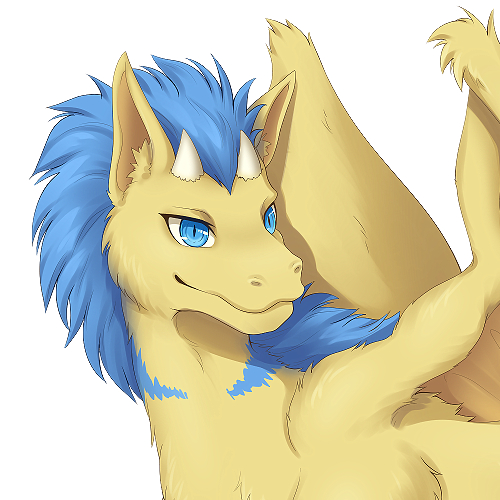
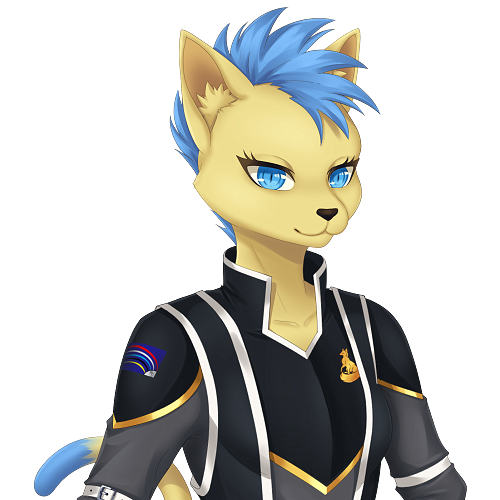
Dragons live on Draconis and have remained secluded there from the end of the Demigod Wars until about 25 years ago, when the Carpathians inadvertently barged into their backyard.
Dragons live for up to two thousand years. They can also change form into whatever shape that pleases them. Once they decide on an alternate form, it takes roughly two weeks to a month to set and then it is permanent.
Dragons have five colors with accompanying abilities. They are as follows:
White: Can read and share memories of others. Can drain powers of demigods and those affected by demigods.
Red: Have power over fire and flame.
Yellow: Power over electricity and magnetism.
Blue: Power over water and ice.
Black: Ability to affect moods and minds.
Black dragons are the only ones that cannot be hybrids. They also retain their ability to use their powers while in their alternate form, which the others cannot do.
Only black dragons can use their abilities in their non-dragon forms.
Dragons are hermaphrodites. Any dragon can have a child with any mate. When a dragon chooses a form, the dragon simply takes on the characteristics of the gender it feels most attuned with.
Character in the above image by: AvareonArt
Komodo
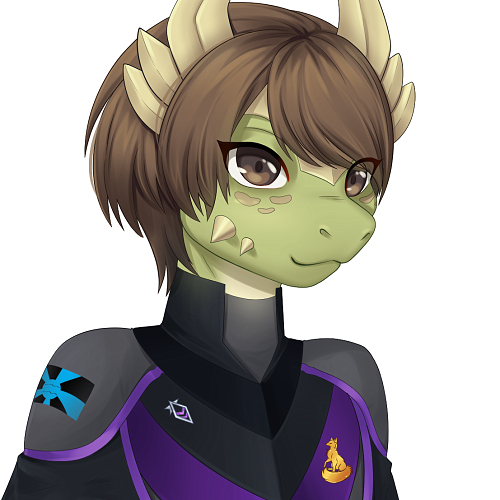
The komodo known to Carpathians all hail from Ramewet, which is not their native planet. Their native planet is unknown at this time.
Komodo are cold-blooded and require either a warm environment or special clothing with heat pads to function in a fast-paced society. Some choose to do this and others prefer to live a more natural life, which means long bouts of lethargy. However, even modern-living komodo need to hibernate occasionally for around two weeks at a time to restore balance to their systems. It is unwise to awaken a komodo during a hibernation period. First, it's nearly impossible, and second, your awakened komodo will be barely coherent, behaving in a way consistent with an extremely drunk human.
Komodo are typically green, occasionally orange, but display fantastic variety in their spikes and bits of armor plating, which are commonly yellow, black, or, in rare cases, red. Upper body strength tends to be comparatively weak, while the lower body is stronger, mostly to support their long, thick tails.
Komodo are from Ramewet, but this is not their home planet. Their home is Nerada, near the elf planet of Elaris, and is unknown to the Carpathian government at present. After Lazmaedia subjugated Elaris, she turned her attention to Nerada and conquered it as well. When Lazmaedia died, not all electronics failed on Nerada. The devices of komodo origin did not fail, while those of the vashta did.
Character in the above image by: AvareonArt
Demons
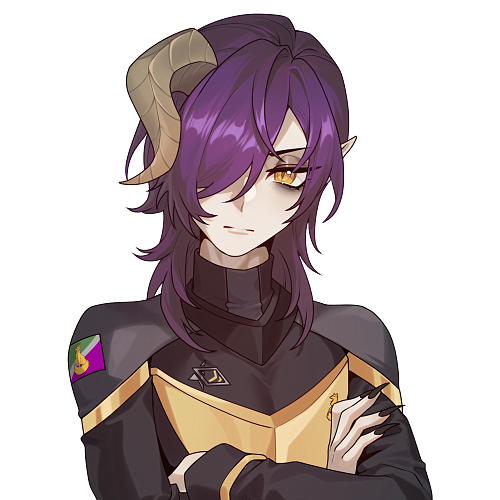
Demons are a species of both complexity and contradiction. They are, on the one hand, a warrior race in certain respects, but are also at the same time very peaceful. Their honor falls primarily within the scope of protecting others from harm or strife. Their society is a strict hierarchy, but also egalitarian. The strongest demons rise to the top and, once there, are entrusted to protect and aid the well-being of others. The honor of a demon is based primarily around how well they protect those to whom they are charged.
That said, however, demons come as two kinds, ones with two horns and, far less commonly, one-horned types. Male demon horns point down while female horns point up. One-horned demons are typically looked down upon by other demons—another contradiction—and sometimes leave their communities to find other masters to serve and generally seek out individuals with power in this regard.
Demons live by the Ten Tenets of the Demonic Code, which are:
1. A demon shall act with compassion and empathy toward all sentient creatures.
2. A demon shall strive to encourage harmony and justice.
3. A demon shall not hesitate to fight to defend others from harm.
4. A demon who serves a cruel master shall use their power and influence to help stay the master's evil intents.
5. A demon shall understand the body is inviolable, subject to one's own will alone.
6. A demon shall recognize the fallibility of mind and action, striving to forgive and be forgiven when true reflection has been made.
7. A demon shall strive to be educated in the ways of the universe.
8. A demon shall begin each day stronger in mind and spirit than the previous day.
9. A demon serving under duress shall not be bound by any oath.
10. A demon shall hold compassion, reason, and wisdom over all established institutions and systems.
Great internal strife befalls demons who come into conflict between their natural tendency to seek out and serve the powerful and the code which requires them to protect others.
Aside from their code, demons come across to others as cold and humorless, which is fairly accurate, as they tend to have low emotional expression and sensitivity. Physical senses, by contrast, are strong, able to detect, for example, changes in heartbeat just by observing minuscule undulations in the skin caused by pulsing blood.
The demons known to Carpathia live on Ramewet. Their homeworld is unknown at this time.
Character in the above image by: Less_End
Aptarans
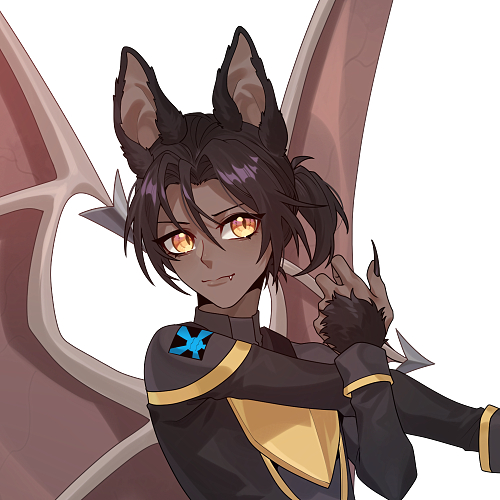
Aptarans are often still referred to as "bats." They see life as a game, albeit a very complex one. They are generally slim, light, agile, and have large wings. Aptarans tend to be a solitary and mischievous species. They don't often make friends, but they are very devoted to the ones they do make. Generally, they are considered observers. They frequently mock that which may be considered the status quo and take a keen interest in the unusual.
It is not common for bats to integrate themselves into a community, much less a hierarchy, which makes them an uncommon sight in the Carpathian Exploration Force.
Lazmaedia destroyed the aptaran homeworld and eradicated all the remaining aptarans she could find. The only known living aptarans are from Ramewet, though some hold out hope that there may be others elsewhere.
Character in the above image by: Less_End
Hotoh
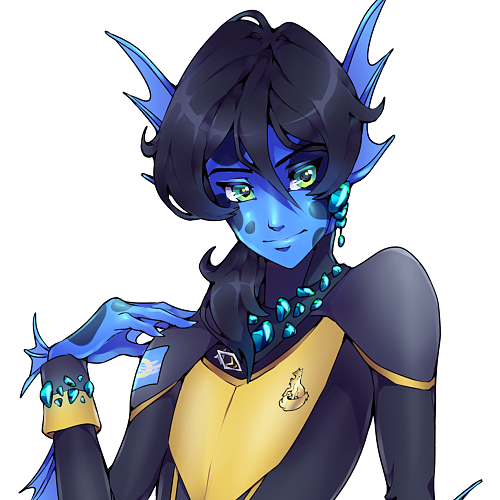
The Hotoh are an amphibious species originating far from Carpathian space, but not far, unfortunately, from the Vashtari Empire. Believing that Lazmaedia was interested in their superior computing and software design skills, they constructed five colony ships and fled the planet, looking for a new home, each taking different directions to increase the odds of at least some of them surviving. They thrive best when given access to water that has a very specific pH balance and mineral content that is unique to their home planet. Efforts to create this artificially have only resulted in partial success, leaving them more lethargic than they once were.
Gemstones and pearls are a major part of their culture. Before the colony ships left their homeworld, common feats of strength and endurance would involve deep dives to collect pearls and gems, which they would wear on their clothing. On land, they require either an extremely humid environment or clothing with moisture-retaining microcells to keep them wet.
The Hotoh were known as a bit of a jumpy, easily startled species even before Lazmaedia entered the picture. Understandably, they're even more cautious now. Carpathia met this species only one year ago, a single colony ship of 30,000 individuals fleeing Lazmaedia and looking for a new place to inhabit. They discovered that the water on Andrast appears to be suitable to their physiology. At present, the inhabitants of the hotoh colony ship are in a lease agreement with the nekomi on Andrast to use some of their abandoned cities.
Character in the above image by: Zelbunnii
Cytos
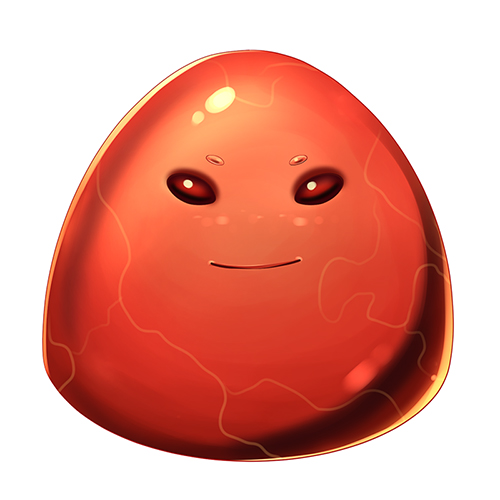
Cytos are a blob-like species, bouncy rather than gelatinous, and come in red, blue, and yellow. They have three genders, male, female, and incubator. With the ability to morph their bodies into various shapes, they are able to launch themselves into space where they can stay for days on end. Further evidence of their hardiness is that they can come into contact with extremely toxic materials with no harm to themselves. They are able to eject a glue-like substance at enemies as a defense mechanism.
Despite Carpathia's policy of no-contact with insufficiently advanced species, their curiosity and ability to stay in orbit for long periods of time eventually forced Carpathia to make an exception to this rule. Lazmaedia destroyed their planet and efforts are now underway to find them a new permanent home.
Character in the above image by: AvareonArt
Reethalit
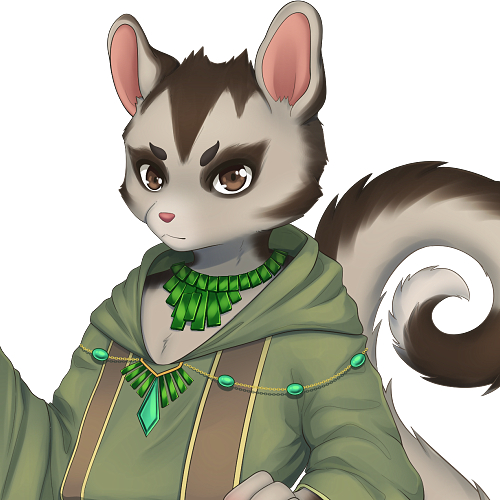
Due to their agonizingly short attention spans, reethalit were once considered the galaxy's most annoying civilization, frequently even getting distracted in the middle of sex. It is the universe's greatest mystery how they were able to achieve space travel. Even they don't know how they managed it. Reethalit now practice mindfulness, including a strict diet and daily meditation to increase long-term concentration. However, this can easily be disrupted by stress. They resemble flying squirrels or sugar gliders and typically wear loose-fit clothing designed to be cast away quickly should they feel the need to fly or glide.
Reethalit are not currently known to Carpathia, except for the Reethalit demigod known as Sassinesa, who explained the nature of the species. They left the planet they were inhabiting for elsewhere and Sassinesa stayed behind. In the words of one dragon, it was quite a feat that they managed to irritate a demigod into submission.
Character in the above image by: AvareonArt
Vireth
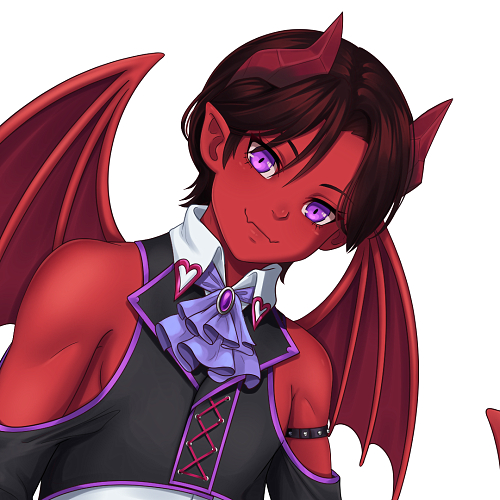
Vireth are an offshoot of the demon species, or vice-versa, depending on who you ask. Whereas demons tend towards full stoicism and limited emotional range, vireth delight in sensuousness and bodily contact. While demons appear to have evolved a keen visual acuity, vireth have done the same, but with their sense of touch. Not only that, but they are also skilled in the art of touching, leading many to refer to them as succubi or incubi. They are capable of mild shapeshifting to maintain a youthful appearance and to match the preferences of their partners.
Physically, they resemble demons in many ways. They have horns on their heads, but they follow the head contour before curving up at the tips. Unlike demons, vireth have small wings, which are not enough to fly or even glide but might make them go splat just a little less hard if one were to fall from a high place. Vireth skin is varying shades of red. Though they do not have a code like the demons, they appear to follow various aspects of it as a matter of course.
Vireth are currently unknown to Carpathia.
Character in the above image by: AvareonArt
Imps
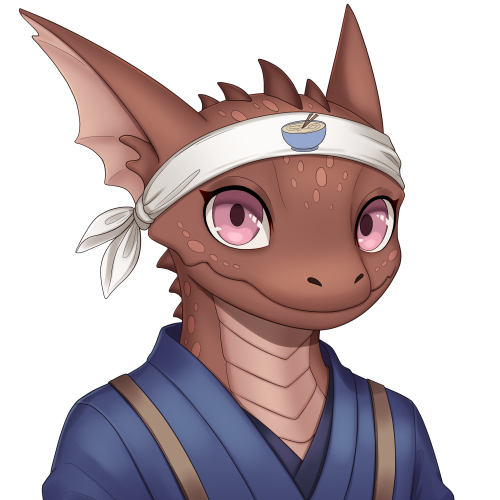
Imps are a small, reptilian species, standing, on average, about 3 feet tall. Though they share some physical characteristics with komodo, they do not appear to be related. Generally thought of as rude or abrasive, imps will not hesitate to tell anyone what they think and have no problem telling a demigod to piss off. They are exceptionally proud of their crafting capability, whether it's a piece of machinery or a bowl of noodles and they will not hear any criticism about it except from other imps.
Imps tend to have names that sound like the word that one would use to describe the sound a piece of machinery would make when going through an industrial shredder. Their skin is typically scaly and chocolate-brown, with large wing-like ears and spikes like tiny dorsal fins of a shark. Their bodies have more stable thermoregulation than komodo, but they are not truly endothermic.
Imps are currently unknown to Carpathia.
Character in the above image by: AvareonArt